As businesses grow, managing customer relationships and marketing campaigns manually becomes increasingly difficult. Because of this, many companies begin to invest in CRM systems and marketing automation platforms. However, these tools are often misunderstood or used interchangeably, even though they serve widely different purposes.
In this article, MKT Software will explain what they are, and highlight the key differences between CRM and marketing automation.
I. What does CRM stand for?
CRM stands for Customer Relationship Management. It’s a system designed to help businesses manage communication with current customers as well as potential ones. CRM acts as a central database that gives sales teams a complete overview of their prospects and customers.
It is important to understand that CRM is not just a contact list. While it does store customer information, the real value of a CRM system lies in organizing and tracking every stage of the sales journey.
A CRM system typically allows businesses to:
- Store and manage contact information.
- Track communication history like emails, calls, meetings,..
- Monitor sales pipelines and deal stages.
- Assign tasks and follow-ups to sales representatives.
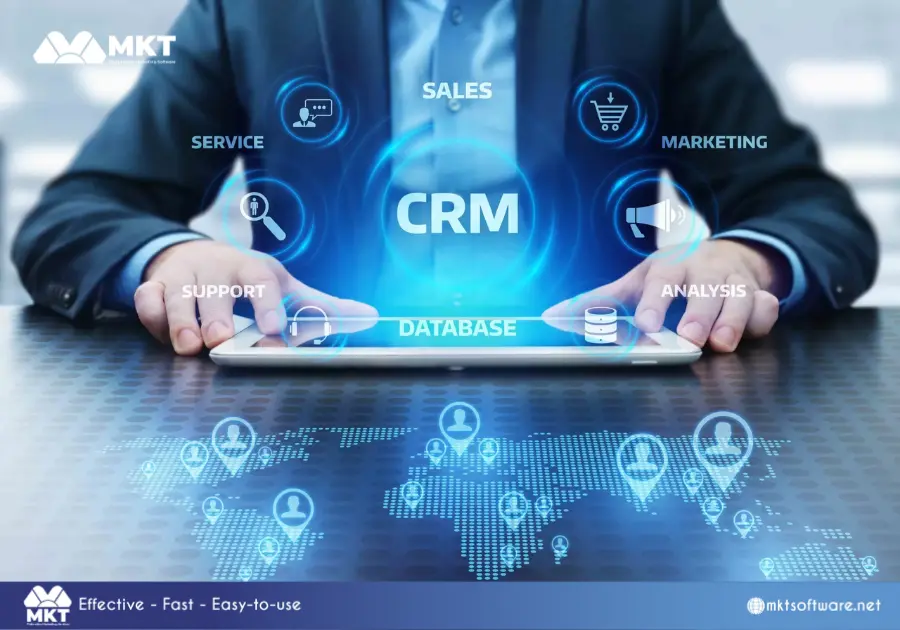
1.1. Benefits of CRM systems
Implementing a CRM system is not simply about adopting new software, but more so creating a structured and centralized approach to managing customer relationships throughout the entire sales lifecycle. Without a CRM system, it becomes difficult to maintain consistency, visibility, and control in each business stage.
Some important benefits CRM offers to businesses include:
- Centralized customer data management: A CRM system stores all customer and prospect information in one unified database. By centralizing data, brands can avoid duplication, reduce errors, and ensure that they are working with accurate and up-to-date information.
- Improved sales pipeline visibility: CRM systems provide a clear overview of the sales pipeline, showing every deal and its current stage. This level of transparency helps businesses make informed decisions and plan resources more effectively.
- Stronger customer relationship management: With full visibility into previous interactions, brands can easily personalize conversations and respond more effectively to customer needs.
- Enhanced team productivity: CRM platforms often include automation features to reduce the need for manual work, thus allowing brands to focus more on high-value activities like building relationships and closing deals.

II. What is marketing automation?
Meanwhile, marketing automation refers to software and tools that automate marketing tasks and workflows. Unlike CRM, which focuses mainly on managing relationships and closing deals, marketing automation focuses on the engagement before the sale occurs.
It is important to note that automation does not replace marketing strategy, they simply ensure that execution may happen consistently and at scale. A marketing automation system often support:
- Automated email campaigns.
- Lead nurturing workflows.
- Landing pages and forms.
- Engagement tracking.
For more detailed explanation, visit: What Is Marketing Automation in Digital Marketing?
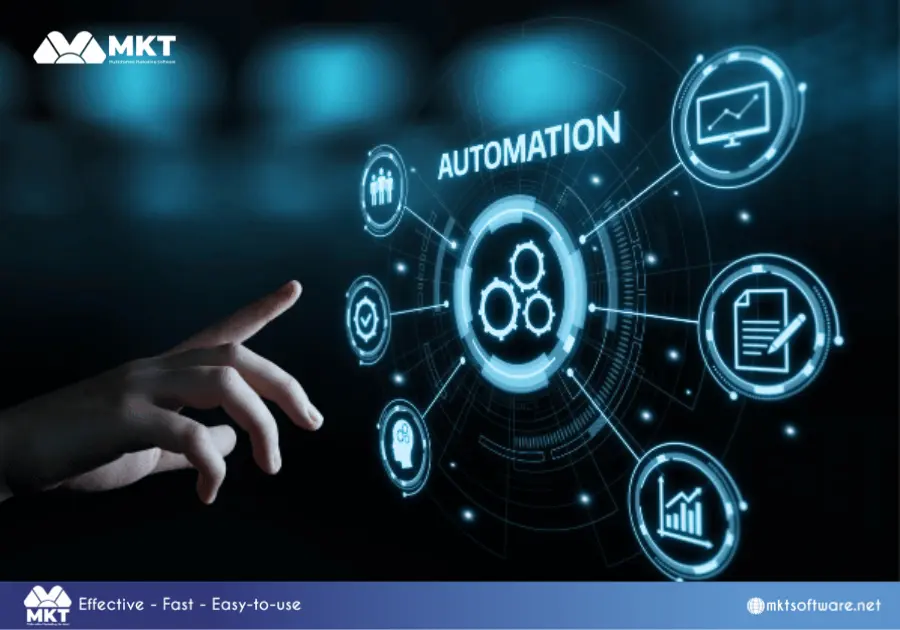
2.1. Benefits of marketing automation
As digital channels continue to expand, marketing teams are expected to manage more campaigns, content, and customer interactions than ever before. Handling all of these tasks manually is not only time-consuming, but also increases the risk of inconsistent communication and missed opportunities.
Marketing automation provides a structured way to manage this complexity. Instead of executing every campaign manually, marketers can design workflows that automatically respond to user behavior.
Some key benefits of marketing automation include:
- Automated lead nurturing workflows: Not all customers are ready to purchase immediately. Marketing automation can enable businesses to design multi-step email campaigns and content journeys that gradually educate and engage leads over time.
- Behavior-based personalization: Many marketing automation platforms can track user behavior, thus allowing businesses to send personalized messages that match the user’s interests.
- Consistent multi-channel communication: Marketing automation ensures that messaging remains consistent across different channels. This consistency strengthens brand presence and reduces the likelihood of losing leads due to inactivity.

III. 4 key differences between CRM and marketing automation
CRM systems and marketing automation platforms are both highly versatile tools that can deliver significant value to business operations when implemented strategically. However, despite their complementary nature, they are designed to serve different functions and objectives within an organization.
A clear understanding of CRM vs marketing automation is therefore essential. Below are some important differences between CRM and marketing automation:
3.1. Core objectives
CRM is more revenue-focused and sales-driven while marketing automation focuses more on engagement and marketing efforts.
A CRM system is built to manage relationships and drive revenue through structured sales processes. Its main objective is to help sales teams track opportunities, manage customer interactions, and close deals efficiently.
In contrast, marketing automation is designed to attract, engage, and nurture leads before they are ready to speak with sales. Its core objective is to generate demand, educate prospects, and move them closer to a purchasing decision.
3.2. Position in the customer journey
CRM systems often focus on the later stages of the customer journey like negotiating deals or closing sales. Meanwhile, marketing automation primarily supports the early and middle stages of the funnel like building awareness or capturing leads.
While there is some overlap in the middle of the funnel, to understand it simply, marketing automation generally prepares leads, and CRM converts them.

3.3. Primary users
CRM and marketing automation are typically utilized by different departments within an organization.
A CRM system is mainly used by sales representatives or business development teams to help them organize contacts, schedule follow-ups, manage deals, and track revenue performance.
Meanwhile, a marketing automation tool is mainly used by marketing teams or digital marketers as they focus on creating campaigns, building workflows or segmenting audiences.
3.4. Type of data collected
Even though both these tools manage customer data, they collect and use it in widely different ways.
A CRM system will primarily store structured sales and customer data, such as: Contact information, company details or purchase history.
Meanwhile, a marketing automation tool will focus more on behavioral and engagement data like: Website visits, form submissions, bounce rate and more.
3.5. Comparison table between CRM and marketing automation
Below is a comparison table of CRM vs marketing automation:
| Criteria | CRM (Customer Relationship Management) | Marketing Automation |
| Core Objective | Manage relationships and close sales | Generate, nurture, and qualify leads |
| Funnel Stage | Middle to bottom of funnel | Top to middle of funnel |
| Main Users | Sales teams, account managers, customer success | Marketing teams, digital marketers |
| Key Metrics | Revenue, deal conversion rate, retention | Lead generation, engagement, campaign ROI |
IV. Final thoughts
By understanding the differences between CRM and marketing automation clearly, businesses can make more informed decisions when selecting tools. Rather than viewing them as competing systems, it is more accurate to see these tools as complementary technologies that support different but connected parts of the customer journey.
For some marketing automation tools recommendations, visit: 6 Most effective digital marketing services for small businesses