Why do so many Facebook remarketing ads campaigns convert warm traffic at a fraction of what they should in 2026? Usually it’s not the ad creative or the budget – it’s a retargeting audience that’s gone stale because the organic touchpoints feeding it stopped being consistent. MKT Post is the Windows software built to keep that organic layer running automatically. This guide covers why remarketing conversion rates quietly drop, how to rebuild them organically, why manual upkeep fails past a certain scale, how automation fixes it, and the specific mistakes that quietly waste a remarketing budget month after month.
I. Why Your Facebook Remarketing Ads Conversion Rate Is Dropping?
A Facebook remarketing ads campaign is only as strong as the audience feeding it, and that audience decays faster than most advertisers realize. A custom audience built from website visitors or Page engagers 90 days ago is mostly cold by the time a campaign is still running against it today – the people in it have moved on, forgotten the brand, or already bought elsewhere.
The second reason is touchpoint frequency. Facebook’s own retargeting guidance is built around showing ads to people who recently engaged – but if the organic side of a Page goes quiet between ad flights, there’s a smaller, staler pool of recent engagers for the remarketing campaign to actually target.
The third reason is creative fatigue compounding with audience fatigue at the same time. When both the ad and the audience are stale simultaneously, conversion rate doesn’t just dip – it falls off a cliff, and most advertisers only notice after a full billing cycle has already been spent chasing an audience that stopped paying attention weeks earlier.
II. How To Improve Facebook Remarketing Ads Organically?
The organic fix is straightforward in principle: keep the Page active enough that Facebook has a fresh pool of engaged people to build remarketing audiences from. Posting consistently – not in bursts followed by silence – keeps the engagement signal that feeds custom audiences from going stale.
Direct engagement matters just as much. Replying to comments, following up on DMs from people who showed interest, and re-sharing content into relevant groups all generate fresh engagement events that Facebook’s audience tools can pick up and feed back into a Facebook remarketing ads custom audience. A Page that only posts and never engages back produces a thinner, less responsive audience than one that does both.
None of this replaces the ad campaign itself – it feeds it. The stronger and fresher the organic engagement layer, the smaller the gap between what the remarketing audience looks like on paper and how it actually behaves when the ad shows up in someone’s feed – and that gap is where most of a wasted remarketing budget quietly disappears.
This matters differently depending on business type. E-commerce brands feel it fastest, since cart-abandoner audiences go cold within days, not months, and a quiet Page between promotions means the remarketing ad is essentially cold-calling people who forgot the brand existed. Service businesses feel it as lead quality – a remarketing ad reaching someone who never got a reply to their comment converts far worse than one reaching someone who just had a real interaction with the Page.
There is a timing dimension worth calling out separately. A remarketing ad shown within a day or two of the original engagement converts noticeably better than the same ad shown three weeks later, once the moment of interest has faded from memory. Automated, consistent posting shortens that gap by keeping fresh engagement flowing continuously instead of arriving in occasional bursts separated by long quiet stretches – which means more of the audience gets reached by the remarketing ad while the interest is still recent enough to matter.
III. Why Manual Facebook Remarketing Strategies Fail At Scale?
Keeping that organic layer fresh by hand works for a single Page running a small campaign. It breaks down the moment a business runs remarketing across several Pages, several audiences, or several product lines at once – there simply isn’t enough time in a day to post consistently, reply to everyone, and follow up on every warm lead across all of them manually.
The failure mode is predictable: the team focuses on whichever Page or campaign is loudest that week, the others go quiet, and the remarketing audiences behind the quiet Pages decay exactly like section one describes. By the time anyone notices the conversion rate has dropped, the audience has already gone cold for weeks.
Manual upkeep also can’t keep pace with how fast a good remarketing strategy needs to iterate – testing which organic content actually drives the kind of engagement that produces a responsive audience takes volume and consistency neither a stretched team nor a part-time hire can realistically sustain.
IV. How To Automate The Organic Layer Behind Facebook Remarketing Ads – MKT Post
MKT Post automates exactly the organic consistency that a strong Facebook remarketing ads strategy depends on. It runs on Windows, drives isolated browser sessions per Page, and keeps content publishing on a steady cadence across as many Pages as a business runs – no more bursts of activity followed by long stretches of silence.
It pairs naturally with the messaging side too. Teams already running a Messenger blast tool to follow up with warm leads, or using Facebook bulk messaging for direct outreach, feed the same fresh engagement signal that keeps remarketing audiences responsive instead of stale.
To be clear about scope: MKT Post doesn’t manage bids or campaigns inside Meta Ads Manager – that decision-making and creative strategy still belongs entirely to the advertiser running the account. What it automates is the organic consistency layer underneath the campaign, so the audience a remarketing ad is actually reaching stays fresh, engaged, and worth spending budget on.

What makes MKT Post useful here specifically is that the same engine already used for general Page consistency doubles as the remarketing support layer without any extra setup. An operator running MKT Post to keep a Page active for its own sake is, without doing anything different, also keeping the custom audience behind any remarketing campaign fresher than it would be otherwise – the two goals share the same underlying fix, which is why teams running MKT Post for organic consistency often notice their Facebook remarketing ads performance improve before they’ve changed a single setting inside Ads Manager itself.
V. Mistakes That Kill Your Facebook Remarketing Ads Performance
- Letting the organic Page go quiet mid-campaign: the remarketing audience decays even while the ad budget keeps spending against it.
- Targeting a 180-day window without segmenting by recency: a visitor from five months ago converts at a completely different rate than one from five days ago – treating them the same wastes budget.
- Reusing the same ad creative for months: creative fatigue compounds with audience fatigue and conversion rate drops faster than either problem alone would cause.
- Ignoring DM and comment follow-ups: warm leads who engaged but never got a reply are exactly the audience a remarketing campaign is supposed to convert – losing them to silence wastes the ad spend that got their attention in the first place.
- Never refreshing the custom audience source: a static audience list built once and never updated gets progressively staler with every single week the campaign keeps running against it unchanged.
Most of these mistakes share a root cause: the organic side of the Page gets treated as separate from the paid campaign instead of as the thing that actually determines whether the campaign has a healthy audience to work with. Fixing the organic consistency problem quietly fixes most of the rest, because a fresh, actively engaged audience tolerates minor creative or targeting mistakes far better than a stale one does – the margin for error simply gets wider.
VI. See Facebook Remarketing Ads In Action
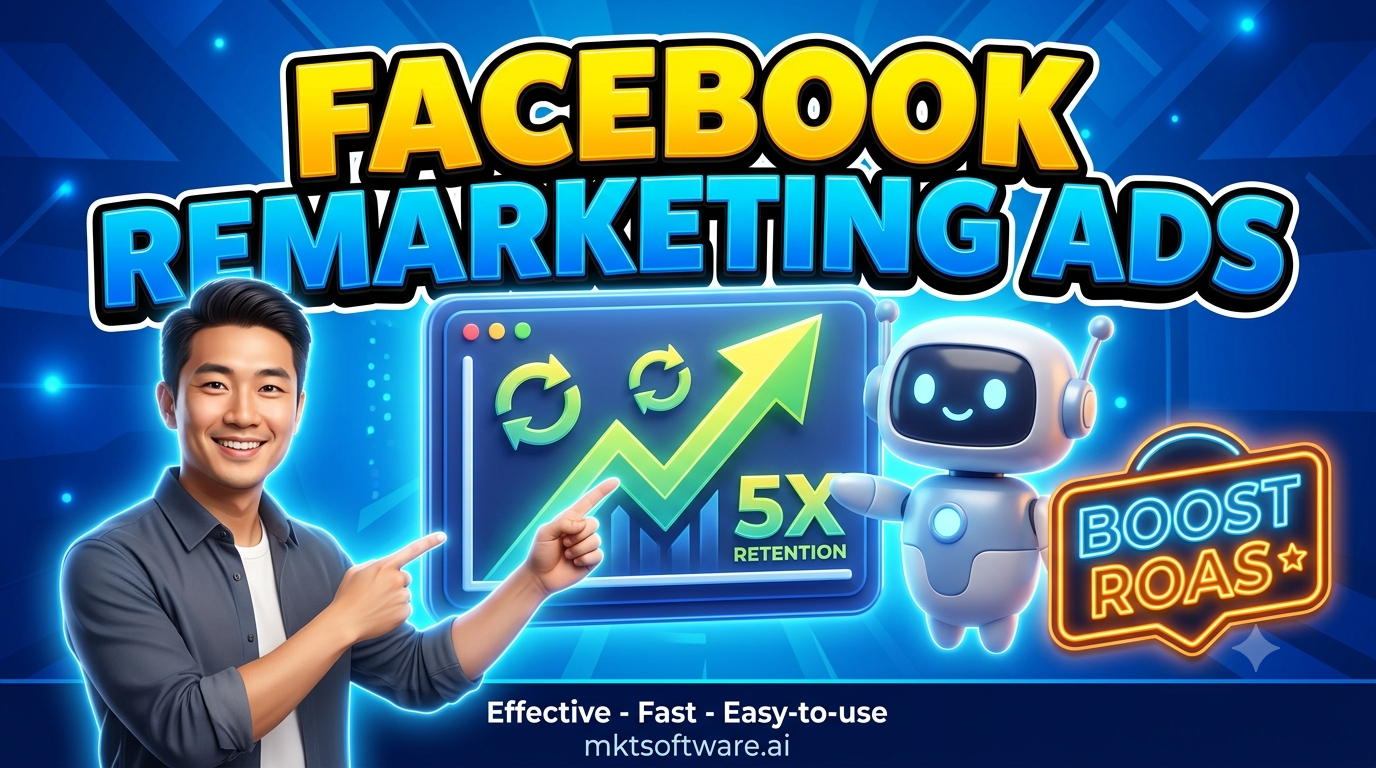
Watch the short walkthrough below to see exactly how consistent, automated MKT Post publishing keeps the organic engagement layer behind a real Facebook remarketing ads strategy fresh over time.
Conclusion
Facebook remarketing ads only convert as well as the audience behind them, and that audience is only as fresh as the organic engagement feeding it. MKT Post keeps that layer running automatically – consistent posting, consistent follow-up, across every Page a business runs – so the remarketing budget is always being spent against people who are actually still paying attention. Advertisers still letting their organic Page go quiet between campaign flights aren’t just losing reach; they’re quietly paying to remarket to an audience that stopped caring weeks ago, and the conversion rate data eventually makes that gap impossible to ignore, usually right around the same time a competitor running a consistently active Page starts pulling noticeably ahead in the very same ad auction.
Contact MKT Software
MKT Software – the leading marketing automation suite for serious operators.
- Address: 4th Floor, Stellar Garden Building, 35 Le Van Thiem Street, Thanh Xuan District, Hanoi
- Hotline: +84335648286
- WhatsApp: +84335648286
- Telegram: @vietlongmkt
- Email: [email protected]
- YouTube: @marketingtool_mktsoftware