Today’s customers expect fast responses, personalized communication, and consistent engagement across every digital touchpoint. Meeting these expectations manually is not only time-consuming, but also difficult to manage as your audience grows.
Marketing automation workflows help businesses create structured, automated journeys that respond to customer behavior in real time. In this article, MKT Software will explore 7 most effective examples of marketing automation workflows.
I. What are marketing automation workflows?
Marketing automation workflows are structured sequences of automated actions triggered by specific user behaviors or predefined conditions. These workflows allow businesses to automatically send messages, assign tasks, or update data without manual intervention.
A typical workflow often includes 3 main components:
- Trigger: The action that starts the workflow.
- Conditions: Rules that determine what happens next.
- Actions: The automated response.

II. Why are marketing automation workflows important?
Marketing automation workflows are not simply technical features within a software platform. They are structured systems that help businesses manage communication more efficiently and strategically.
Well-designed workflows ensure that the right message reaches the right audience at the right time. Below are the key reasons why marketing automation workflows are important:
- Improve operational efficiency: Workflows automate repetitive tasks such as email sending, follow-ups, segmentation, and notifications. This reduces manual workload and allows marketing teams to focus on strategy and creative development.
- Ensure consistent communication: Automation guarantees that every lead or customer receives timely and structured messages based on predefined rules. This reduces the risk of forgotten follow-ups or inconsistent messaging.
- Enable personalized customer experiences: Workflows can be triggered by user behavior, preferences, or engagement history. This allows businesses to deliver relevant and targeted content instead of generic mass communication.
- Increase conversion rates: Timely follow-ups, reminder emails, and targeted offers help move prospects through the funnel more effectively, resulting in higher conversions.
III. Examples of marketing automation workflows
Marketing automation workflows can be applied at nearly every stage of the customer journey. Below are 7 practical examples of marketing automation workflows:
3.1. Email marketing automation workflows
Email marketing automation workflows are among the most widely used types of automation. These workflows focus on sending scheduled or behavior-based email sequences.
Common examples of email marketing automation workflows include:
- Welcome email series: Triggered when a user subscribes to a newsletter. The workflow may send an introduction email, followed by product highlights and useful resources.
- Educational drip campaigns: Delivering a series of emails over time to educate leads about services or industry topics.
- Event reminder sequences: Sending reminders before webinars or online events.
3.2. AI marketing automation workflows
AI-powered marketing automation workflows use artificial intelligence to optimize targeting, timing, and personalization.
Some examples of this type of workflow include:
- Predictive send-time optimization: AI determines the best time to send emails to each recipient.
- Product recommendation engines: Suggesting products based on browsing behavior or purchase history.
- Chatbot-driven workflows: AI chatbots automatically respond to inquiries and guide users toward relevant content or offers.

3.3. Lead nurturing workflows
Lead nurturing workflows are designed to guide potential customers through the decision-making process over time. They can help build trust and gradually move potential customers closer to a purchase decision.
A typical lead nurturing workflow may include:
- Sending educational content after a content download.
- Following up with case studies or testimonials.
- Offering a consultation or product demo.
Lead nurturing is especially important in B2B environments where the sales cycle is longer and requires multiple touchpoints.
If you want to know more about how to increase leads, visit: 5 More Tips to Improve Lead Generation in Digital Marketing
3.4. Abandoned cart workflows
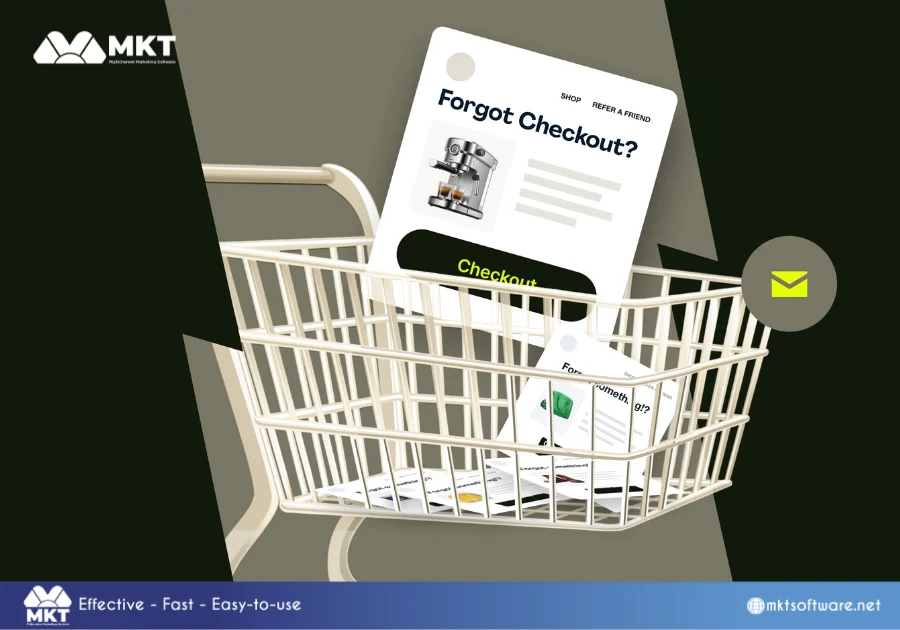
Abandoned cart workflows are commonly used in ecommerce businesses. It is triggered automatically when a customer adds items to their cart but does not complete the purchase, with the main goal being to remind customers and recover overall conversion rates.
The workflow may include:
- A reminder email within a few hours.
- A follow-up email highlighting product benefits.
- A limited-time discount offer.
3.5. Post-purchase follow-up workflows
Post-purchase follow-up workflows focus on customer retention and satisfaction after a sale is completed. They aim to strengthen the customer relationship and encourage repeat purchases even after a sale ends.
The workflow may include:
- Order confirmation and shipping updates.
- Product usage instructions or onboarding guides.
- Requesting product reviews.
3.6. Upselling and cross-selling workflows
Upselling and cross-selling workflows aim to increase customer lifetime value by recommending additional products or upgrades. They rely on customer data and purchase history to deliver relevant recommendations at the right time.
Some examples include:
- Suggesting premium versions of purchased products.
- Recommending complementary items.
- Sending personalized upgrade offers after a certain usage period.

3.7. Customer feedback workflows
Customer feedback workflows are designed to collect insights and improve service quality. The workflow may send surveys, satisfaction ratings, or review requests. Responses can then trigger additional actions, such as notifying the support team if feedback is negative.
Common triggers include:
- After a purchase.
- After customer support interaction.
- After a subscription renewal.
This type of workflow aims to support continuous improvement and strengthen customer loyalty.
IV. Optimizing marketing automation workflows
Creating marketing automation workflows is only the first step. To ensure long-term effectiveness, workflows must be continuously monitored, tested, and refined. Without optimization, even well-designed automation sequences can become easily outdated.
Below are key strategies to optimize marketing automation workflows:
- Define clear and measurable goals: Each workflow should have a specific objective as clear goals make it easier to evaluate performance and identify areas for improvement.
- Analyze performance metrics regularly: Monitor key indicators to help identify weak points within the workflow.
- Simplify complex workflows: Overly complicated workflows with too many branches or conditions can reduce clarity and effectiveness.
- Use A/B testing to improve results: Test various different subject lines, email content, call-to-action buttons, timing intervals, and messaging styles. Small adjustments can significantly impact overall performance.
V. Final thoughts: Marketing automation workflows
Marketing automation workflows are powerful tools for improving efficiency, personalization, and scalability in modern marketing. From email sequences and AI-driven campaigns to abandoned cart reminders and post-purchase follow-ups, these workflows support every stage of the customer journey.
See more: 4 Must-know differences between CRM and marketing automation