Mass messaging on Facebook is becoming an essential strategy for businesses that want to reach more customers faster. But at the same time, many people struggle with account restrictions, message limits, or even sudden bans without knowing why. So how do you scale your messaging without putting your account at risk? In this guide, MKT Software will show you how Facebook will actually handle messaging in 2026, what factors will cause limitations, and most importantly, how to send mass messages safely and effectively.
I. Can you do mass messaging on Facebook?
Mass messaging on Facebook is entirely possible, but not in the uncontrolled bulk sending manner that many people assume. Facebook allows users to message multiple recipients; however, the platform consistently prioritizes natural behavior and genuine interactions. If you send messages in a way that resembles normal user activity featuring relevant, non-intrusive content the system is unlikely to impose restrictions. On the other hand, sending messages too quickly, repeating the same content, or exhibiting spam-like behavior can easily result in limitations or even a temporary messaging ban.
The key point to understand is that Facebook does not prohibit mass messaging on Facebook; rather, it regulates how it is carried out. Accounts with a strong activity history, authentic engagement, and valuable messaging content tend to operate more safely. In contrast, actions such as copy-pasting messages, sending identical content to a large number of recipients within a short timeframe, or receiving little to no response from recipients are often negatively evaluated. Therefore, to execute mass messaging on Facebook effectively, it is essential to combine a well-planned content strategy with a safe implementation approach, instead of focusing solely on volume.
II. Why accounts get banned when doing mass messaging?
There are many cases where accounts get restricted after only a few attempts at bulk messaging without any clear explanation. The reason lies in Facebook’s continuous monitoring of user behavior to detect spam signals. When your messaging pattern deviates from natural interaction, the system quickly assesses the risk and applies limitations. Below are the most common reasons why accounts get banned when performing Mass messaging on Facebook:

- Sending too many messages in a short period of time: When you send a large volume of messages continuously within minutes, Facebook may interpret this as automated behavior. Typical users rarely message at such a speed, making the account highly likely to be flagged.
- Repetitive, copy-paste content: Using the same message for multiple recipients signals spam to the system. Messages lacking personalization are often rated as low-quality and are more likely to be restricted.
- Low response rate from recipients: If most recipients ignore or do not reply to your messages, Facebook may assume the content is not valuable. This reduces the account’s credibility and increases the risk of limitations.
- Including links or sales content in the first message: Sending links or promoting products right away can make recipients uncomfortable. This behavior is closely monitored by Facebook due to its association with spam and unsolicited advertising.
- Low-trust or irregular account activity: New accounts, accounts with minimal engagement, or those lacking a consistent activity history are more likely to be scrutinized. When combined with bulk messaging behavior, the system may quickly place them under monitoring.
III. How to do mass messaging on Facebook without getting banned
IV. 3 Algorithm signals that control messaging visibility
Every message you send is evaluated by Facebook based on user behavior data. Some conversations are prioritized and gain better visibility, while others may quietly sink without you even noticing. The difference lies in how the system measures the quality of interaction. Below are three key signals that determine whether your messages are prioritized when performing Mass messaging on Facebook:
- Response rate: Facebook monitors whether recipients reply to your messages. When more people respond, the system interprets the content as valuable and continues to distribute it more effectively.
- Message quality: Clear, natural, and personalized messages are rated more highly. In contrast, repetitive, overly promotional, or irrelevant content is more likely to be restricted.
- User interaction signals: Conversations with multiple back-and-forth exchanges are given higher priority. When both parties actively engage, Facebook recognizes it as genuine interaction and increases the account’s credibility.
V. Common mistakes that get you banned instantly

VI. Best tool for mass messaging on Facebook – MKT Care

1. Overview of MKT Care
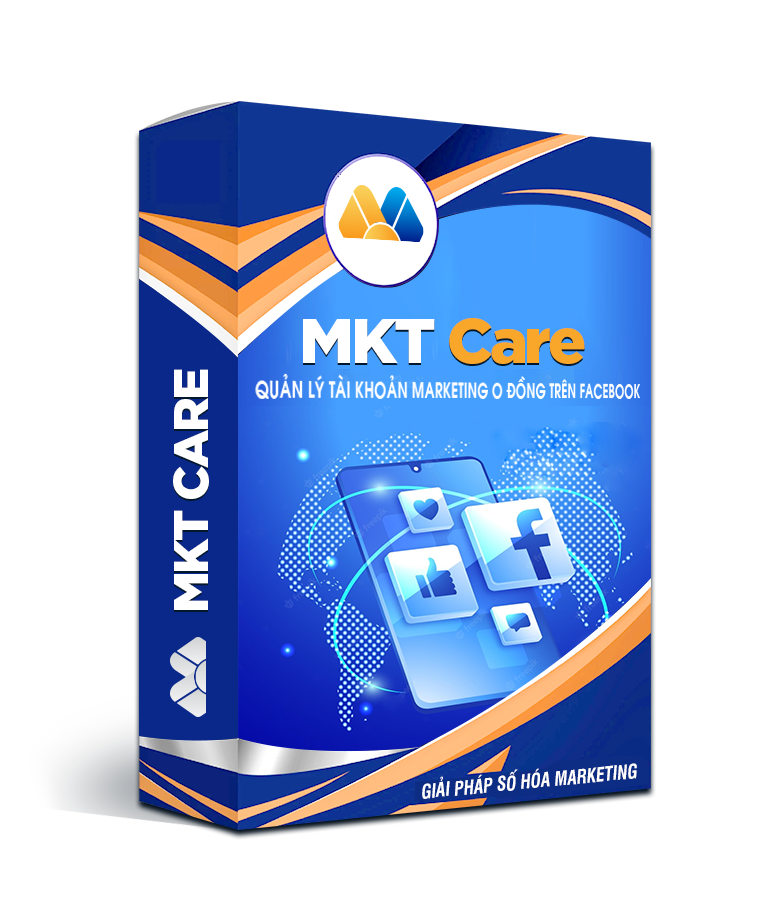
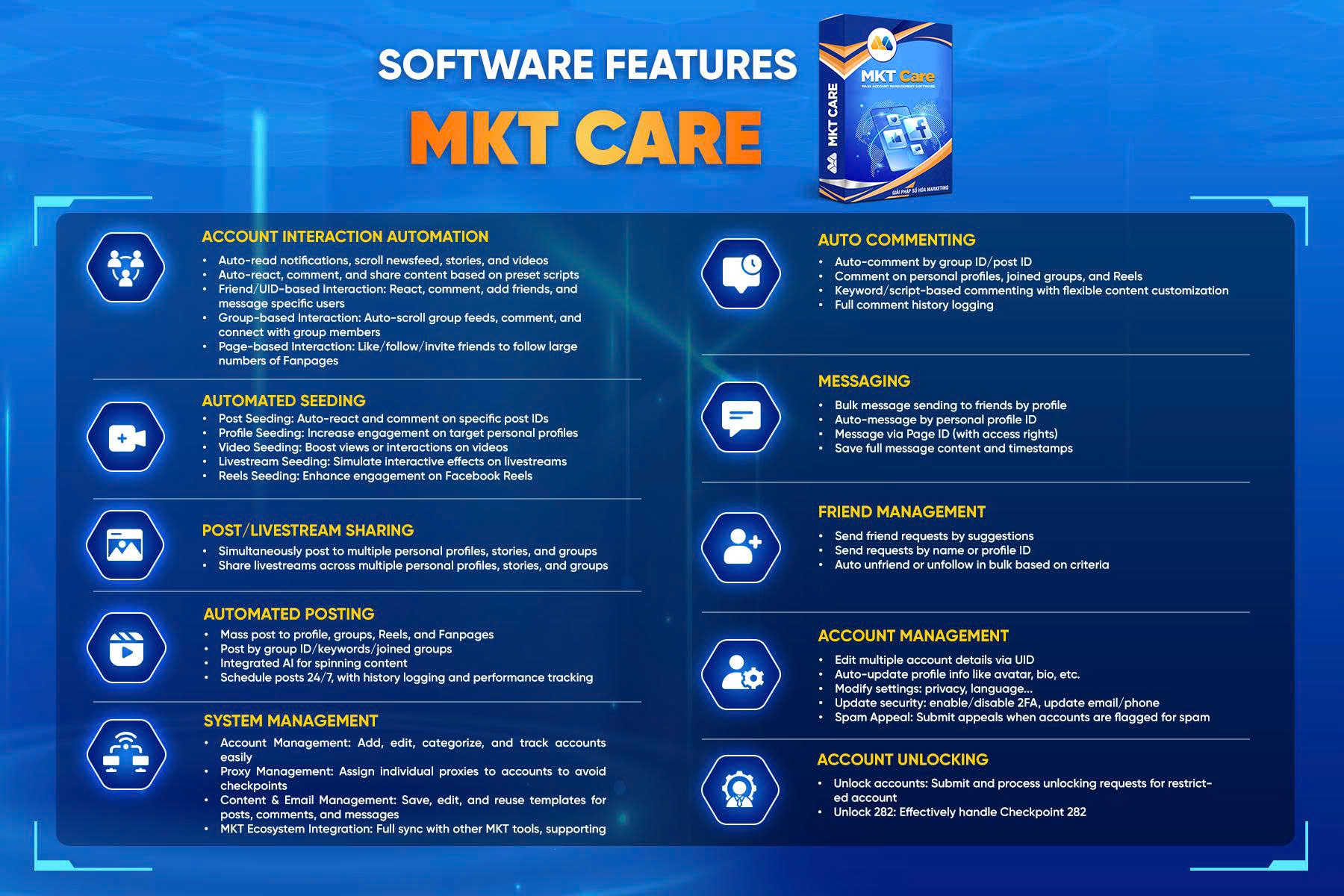
MKT Care is a software solution designed to support Facebook management and automation, allowing users to operate multiple accounts simultaneously in a stable manner. The tool enables actions such as posting, messaging, and engagement while simulating real user behavior. As a result, customer outreach becomes faster while still ensuring account safety.
In addition, MKT Care helps build a structured marketing system instead of executing isolated steps. Users can manage all activities from a single platform, reducing dependency on manpower and optimizing operational costs. When implemented effectively, this software significantly improves customer reach efficiency and enhances overall business performance.
Key features of MKT Care:
2. Video tutorial on how to mass message on Facebook using MKT Care
VII. Metrics for measuring the effectiveness of Facebook mass messaging campaigns
Sending a large number of messages does not necessarily guarantee good results if performance is not measured correctly. To determine whether your campaign is effective or needs adjustment, you should focus on key metrics rather than just the number of messages sent. With clear data, optimization becomes more accurate and efficient. Below are the key metrics to evaluate the effectiveness of Mass messaging on Facebook:
- Response rate: This metric shows how many recipients reply to your messages. A higher rate indicates that your content is relevant and capable of generating strong engagement.
- Open rate: This reflects how many recipients actually read your messages. A low open rate may suggest that your content is not compelling enough or that you are targeting the wrong audience.
- Conversion rate: This is the most critical metric for businesses, measuring how many recipients take action such as making a purchase, signing up, or leaving their information after receiving your message.
- Response time: The speed at which you reply to customers also impacts campaign performance. Faster responses improve user experience and increase the likelihood of closing a deal.
- Spam/Block rate: If many users block or report your messages, your account can quickly become restricted. This is a key warning metric that should be closely monitored.
- Conversation depth: Longer conversations with multiple exchanges indicate valuable content. Facebook also prioritizes accounts with active, ongoing interaction histories.